Selective Justice And National Cohesion: The Incarceration of Nnamdi Kanu and Freedom Of Sheikh Gumi In Nigeria
By Frederick Onyiuke
Nigeria’s struggle with insecurity has exposed deep fractures in governance, justice, and national cohesion. Few issues illustrate these tensions more starkly than the continued incarceration of Nnamdi Kanu, leader of the Indigenous People of Biafra (IPOB), alongside the freedom and public visibility of figures such as Sheikh Ahmad Gumi, a cleric known for engaging with armed groups in northern Nigeria. To many Nigerians, this contrast raises troubling questions about selective justice, equality before the law, and the politicization of security responses.
Nnamdi Kanu and the State’s Hard Line
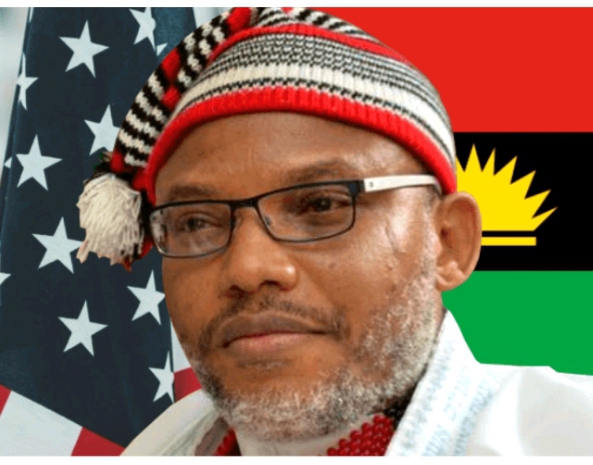
Nnamdi Kanu has been in detention on charges related to terrorism, treasonable felony, and activities linked to IPOB. The federal government has framed IPOB as a violent separatist organization, citing attacks on security personnel and enforcement of sit-at-home orders in parts of the South-East. Kanu’s arrest abroad and return to Nigeria, followed by prolonged detention despite court rulings that have been interpreted by supporters as favorable to him, have fueled perceptions of legal overreach.
For many in the South-East, Kanu’s case symbolizes a broader sense of marginalization. They argue that grievances—whether economic, political, or historical—are being met with force rather than dialogue. Human rights advocates have also raised concerns about due process, the rule of law, and whether security considerations are being used to justify indefinite detention.
Sheikh Gumi and Engagement with Armed Groups
In contrast, Sheikh Ahmad Gumi has remained free and publicly active, even as he has acknowledged contacts with armed groups often described as bandits or insurgents operating in northern Nigeria. Gumi has defended these engagements as efforts at mediation, dialogue, and conflict resolution, arguing that understanding the grievances of armed actors can help end violence.
Supporters of this approach see it as pragmatic, especially in regions plagued by mass kidnappings and rural insecurity. Critics, however, contend that such engagement risks legitimizing violent groups and creates the impression that those associated with armed violence in the North are treated with leniency. When juxtaposed with the state’s uncompromising stance toward IPOB, this perception feeds accusations of double standards.
The Problem of Perceived Double Standards
At the heart of the controversy is not only who is detained and who is free, but what this signals about the Nigerian state. When one region’s agitator is incarcerated while another region’s interlocutor with armed groups is allowed wide latitude, many citizens interpret this through ethnic, regional, or religious lenses. Such perceptions—whether fully accurate or not—can be as damaging as actual injustice, eroding trust in institutions and deepening polarization.
Nigeria’s constitution guarantees equality before the law, yet the uneven application of security policies undermines this principle. If dialogue is considered legitimate in one context, citizens ask why it is dismissed in another. Conversely, if association with violent actors is criminal in one case, why is it tolerated in another?
Implications for National Unity and Security
Selective justice, or the perception of it, has serious consequences. It weakens national unity, fuels resentment, and can radicalize otherwise peaceful movements. Insecurity thrives where citizens lose faith in fair governance. A state seen as impartial and law-bound is better positioned to win cooperation against violence than one perceived as biased
Toward Consistency and the Rule of Law
Nigeria’s path forward requires consistency. The rule of law must apply uniformly, irrespective of region, religion, or political implications. Where dialogue is appropriate, it should be transparently regulated and accountable. Where prosecution is warranted, it should follow due process and respect court decisions. Above all, grievances—whether from the South-East, the North-West, or elsewhere—must be addressed through inclusive political solutions, not selective repression.
The contrasting cases of Nnamdi Kanu and Sheikh Gumi have become symbols in a larger debate about justice in Nigeria. Resolving this debate fairly is not just about two individuals; it is about restoring confidence in the Nigerian state and reaffirming the principle that no citizen, and no region, is above or beneath the law.
*Fredrick Ikechukwu Onyiuke is an activist and a freedom fighter
Share this with Friends and Families Here::
Related





0 Comments
No Comments Yet!
You can be first to comment this post!