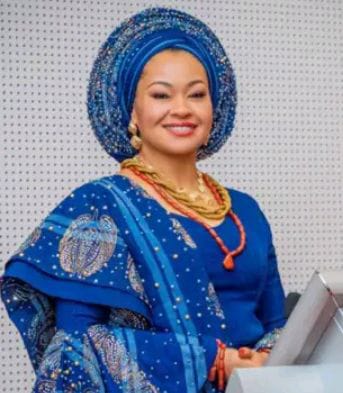
International Women’s Day 2025: Will Nigeria Ever Listen to Women Like Natasha Akpoti-Uduaghan?

International Women’s Day 2025: Will Nigeria Ever Listen to Women Like Natasha Akpoti-Uduaghan?

By  Vivian Iwu
On this year’s International Women’s Day, as the world echoes the call for gender equality, Nigerian women are once again reminded of the harsh reality of silencing, exclusion, and institutional pushback against female voices in leadership. The global theme, “Invest in Women: Accelerate Progress,” urges societies to recognize the value women bring to governance, development, and innovation. Yet, here in Nigeria, the case of Senator Natasha Akpoti-Uduaghan raises a pressing question: Are we truly ready to listen to women who challenge the status quo?
A WOMAN’S STRUGGLE FOR LEGISLATIVE RELEVANCE
Senator Natasha Akpoti-Uduaghan, a rare female voice in the Nigerian Senate, has spent years advocating for the revival of the Ajaokuta Steel Company—an Economic game-changer for Nigeria. Her repeated attempts to push a bill addressing the issue were ignored not once, not twice, but six times. When she finally insisted on being heard, the response from her male colleagues was not engagement or debate but outright punishment.
Her offense? Challenging the system that has long relegated women in politics to mere spectators. The recommendations of the Senate panel read like a calculated strategy to erase her presence from the legislative space: suspension from all Senate activities, the locking of her office, withdrawal of salaries, allowances, and security details, and a ban on representing herself as a senator locally or internationally.
THE PATTERN OF SILENCING WOMEN IN POWER
Senator Natasha’s ordeal is not an isolated case. Nigerian politics has a long history of suppressing women who dare to challenge the status quo. From the late Dora Akunyili’s battles against corruption in the pharmaceutical industry to Ngozi Okonjo-Iweala’s struggles against economic sabotage, female leaders often face hostility, intimidation, and institutional pushback.
The message is clear: Women in power must either conform, remain silent, or risk being shut out. Natasha’s six-month suspension is not just about seating arrangements or legislative decorum—it is about the discomfort men in power feel when confronted by an assertive woman who refuses to be ignored.
When Women Speak, the Nation Wins
Globally, countries that invest in women’s leadership and economic participation experience significant socio-economic progress. Rwanda, for example, boasts one of the highest percentages of female parliamentarians in the world, and its governance model has led to impressive economic and social advancements. Meanwhile, Nigeria, despite having a population where women form nearly half, continues to marginalize female voices in governance.
Ajaokuta Steel Company, the very subject of Natasha’s bill, remains a dormant asset—one that could create thousands of jobs and drive industrialization. Had her bill been treated with the seriousness it deserved, Nigeria could be on the path to self-sufficiency in steel production. Instead, those in power would rather suspend her than listen to the economic argument she brings to the table.
INTERNATIONAL WOMEN’S DAY: A CALL TO ACTION
As we mark International Women’s Day, Nigerian women must recognize that Natasha’s battle is our battle. Her suspension is a warning to all women who dare to demand accountability, representation, and economic justice. If Nigeria is serious about investing in women and accelerating progress, it must stop punishing women for speaking up.
To the Senate of the Federal Republic of Nigeria, this is a moment of reckoning. Silencing Natasha Akpoti-Uduaghan does not just harm her—it damages democracy, weakens economic progress, and sets back the fight for gender inclusion in governance.
Nigerian women have fought too hard and come too far to be silenced now. If we truly believe in the power of women to drive change, then it is time to stand up, speak out, and insist that our voices will be heard.

About author

You might also like

FEATURES

Mazi Nnamdi Kanu: A Victim Of Igbophobia  – Sir Temple Ogueri Onyeukwu

Sir Temple Ogueri Onyeukwu, former aspirant for the Mbaike House of Representatives, retired Military Officer, Social Crusader, Philanthropist and Political Analysts granted our correspondent this interview in his office in

FEATURES

Celebrating An Accomplished Scholar and Vice  Chancellor: Prof. I. N. S Dozie@59

 By Bright OKEREKE Professor Ikechukwu Nosike Simplicius Dozie, just as his name ‘Simplicius’ implies; is a simple and noble man; though, his brand is usually not excited by bogus lifestyles

FEATURES

MONEY AND MUSCLE POLITICS IN IMO STATE—WHY A PARADIGM SHIFT IS LONG OVERDUE

For what it’s worth, political leadership, in its purest form, is about attaining political power and leveraging on it to influence decisions that bring about human development, and improvement in

FEATURES

IKUKU OMA To Empower 20 Nwangele Youths, On 23rd November

  IKUKU OMA: A woman making History in Nwangele LGA. IKUKU OMA: A woman Restoring the Hope of Youths in Nwangele LGA. IKUKU OMA: A revolution of Goodness. An official

FEATURES

Herdsmen Attacks And The Challenges Ahead 

BY CHINONSO JOHN ELUMEZIE Imo State, situated in southeastern Nigeria and home to a significant agrarian Igbo population is struggling with escalating insecurity caused by recurring Fulani herdsmen attacks.  These

FEATURES

WHAT YOU MUST KNOW ABOUT SEXUAL HARASSMENT – Prof Obiaraeri 

WHAT YOU MUST KNOW ABOUT SEXUAL HARASSMENT – Prof Obiaraeri By Nnamdi Obiaraeri In a permissive society, ignorance of the law is often, albeit foolishly, clothed with arrogance. Arising from

0 Comments

No Comments Yet!

You can be first to comment this post!

Leave a Reply

Let's talk, Leave a Reply