Perhaps she understood that intellectual acuity, when accompanied by composure, discipline, and a cultivated sense of responsibility, possesses a significance that extends beyond the immediate circumstances in which it is displayed.
Or perhaps she simply knew the gentleman rather well.
There is, after all, no substitute for knowing a man.
Not knowing his reputation.
Not knowing his titles.
Not knowing the impressive catalogue of his acquaintances.
*Knowing the man.*
For titles are curious ornaments.
They may confer prestige without wisdom, authority without judgment, and occasionally, a rather magnificent office upon an altogether unremarkable occupant.
Character is a different proposition entirely.
Character is what survives when the titles are withdrawn, the applause has evaporated, and the elaborate architecture of public admiration has been dismantled.
It is what a man carries into the room when he has nothing left with which to impress its occupants.
And it is in this more intimate territory of human evaluation that my appreciation of Dr. Ugorji has long resided.
I have admired his intellectual vigor, his refinement of thought, his disciplined disposition, and the dignity with which he has approached his responsibilities.
His journey, as I have observed it, has been one laced with honor and integrity.
Not the theatrical variety of integrity, so frequently advertised and so seldom practiced, but that quieter disposition in which a man’s conduct remains answerable to his conscience.
And conscience, ladies and gentlemen, is a most inconvenient companion.
It has the irritating habit of asking difficult questions precisely when expediency has prepared the most attractive answers.
Therein lies its value.
There is a philosophical distinction worth contemplating.
*Ambition asks what a man may become. Character asks what he must never cease to be.*
The first concerns achievement.
The second concerns identity.
And while society has developed elaborate ceremonies for celebrating achievement, it remains curiously less enthusiastic about examining the moral compromises by which achievement is sometimes secured.
Perhaps that explains something about our present national predicament.
We inhabit an era in which the vocabulary of leadership has suffered a rather unfortunate separation from its meaning.
Public service is invoked with solemnity, while private advantage is pursued with remarkable enthusiasm.
Competence is applauded in principle and occasionally treated as an inconvenience in practice.
Accountability is demanded of adversaries and negotiated away among allies.
And integrity, that magnificent word, is paraded through political speeches with such frequency that one might reasonably wonder whether its repeated invocation is intended to compensate for its occasional absence.
Meanwhile, the ordinary citizen continues to shoulder the consequences.
There is something almost Shakespearean about the predicament of a nation so extravagantly endowed with human ingenuity and material possibility, yet so persistently challenged by the quality and continuity of its institutions.
A tragedy, certainly.
But one that need not remain without remedy.
And here we arrive at the question that ought to animate every serious conversation about the governorship of Imo State.
What, precisely, should leadership accomplish?
Not what should it promise.
Not what should it proclaim.
And certainly not what elaborate ceremonial language should be employed to celebrate its arrival.
What should it accomplish?
Security must become more than a declaration of intent.
Economic opportunity must extend beyond the elegant abstractions of development plans.
Public institutions must be capable of functioning without perpetual dependence upon the personality of their occupants.
And the dignity of ordinary citizens must cease to be an ornamental phrase reserved for campaign seasons.
These are not matters susceptible to the seductions of rhetoric.
They demand intellectual seriousness, administrative competence, moral discipline, and that rare capacity to subordinate personal convenience to public obligation.
*Power is an extraordinary instrument. In disciplined hands, it can enlarge the possibilities of an entire society. In careless hands, it can diminish generations.*
And history, that magnificent and thoroughly unsentimental accountant, eventually presents its ledger.
It does not concern itself indefinitely with the grandeur of an inauguration.
It asks what became of the schools.
What became of the hospitals.
What became of the institutions.
What became of the promises.
And, most importantly, what became of the people.
An uncomfortable interrogation, I grant you.
But an indispensable one.
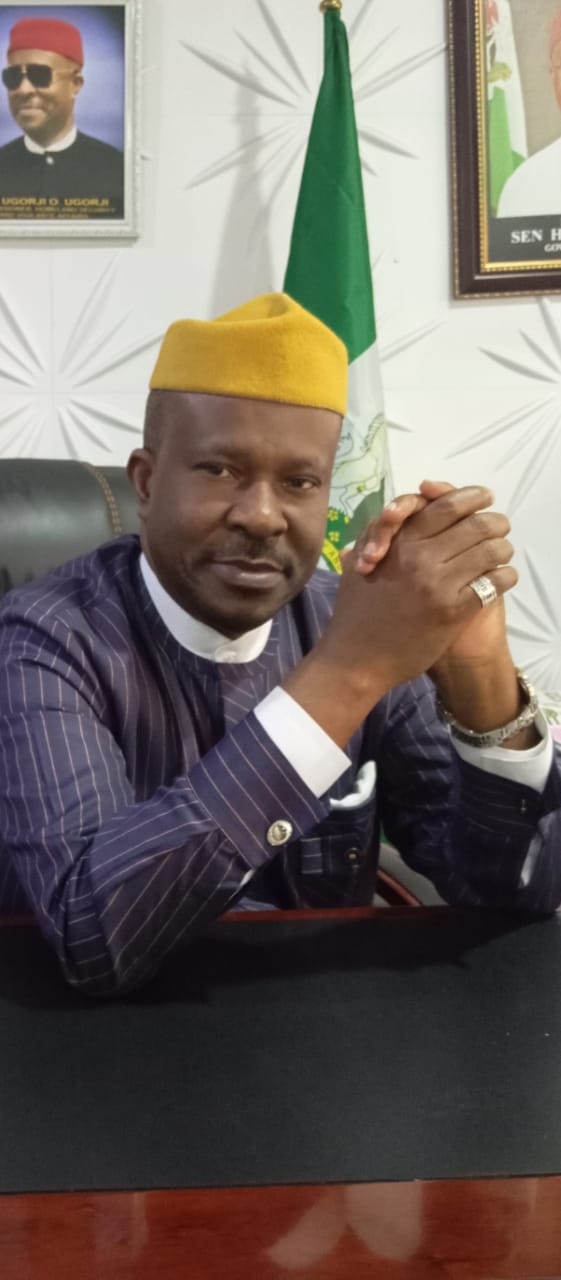
My dear Dr. Ugorji, Nwannem,
As you enter this consequential chapter of your public life, I find myself returning to those distant conversations in New York.
I remember the intellectual exchanges.
I remember the confidence with which Professor Joy Ogwu spoke of your possibilities.
And I remember the qualities of bearing and judgment that first commanded my personal respect.
There is something profoundly instructive about the distance between the man one knew yesterday and the responsibilities he contemplates today.
For destiny, assuming one subscribes to its existence, is not a certificate of entitlement.
It is, at best, an invitation to responsibility.
And responsibility is a demanding mistress.
She is unimpressed by pedigree, indifferent to applause, and singularly concerned with results.
The greater the office, the heavier her demands.
The more consequential the ambition, the more exacting the scrutiny it must withstand.
That is as it should be.
For public trust is not an inheritance to be claimed. It is a covenant to be earned, exercised with restraint, and continually justified by conduct.
And so, my dear brother, as I contemplate your journey, I do so with the warmth of an old friendship and an equally sincere appreciation of the obligations inherent in the path you have chosen.
May your intellect remain sharpened by curiosity.
May your convictions remain fortified by principle.
May your vigor be tempered by wisdom.
And may your conduct remain answerable to that quiet tribunal before which every honorable man must ultimately appear: his own conscience.
*Sail on, Nwannem.*
Sail on with courage, dignity, and clarity of purpose.
But remember, the sea has never been particularly impressed by the confidence of a captain.
It respects preparation.
It respects judgment.
And it has a rather brutal way of exposing the difference between the two.
The destination matters, certainly.
But so does the vessel.
So does the compass.
And so, above all, does the integrity of the man entrusted with the helm.
For there is a peculiar tragedy in arriving at the summit of one’s ambition only to discover that the ascent has demanded the surrender of everything that once made the journey honorable.
I return, finally, to Professor Joy Ogwu.
What a curious and beautiful thing it is that words spoken in another city, in another season of our lives, should return with such extraordinary relevance.
Perhaps that is the quiet genius of memory.
It preserves what the present does not yet understand.
And years later, when circumstances have acquired the necessary shape, it returns those fragments to us, not as predictions fulfilled, but as invitations to contemplate the remarkable continuity of human character.
To the distinguished members of this group, I once again express my gratitude for your generous welcome.
I look forward to the pleasure of your acquaintance, the rigor of your arguments, the generosity of your perspectives, and the kind of principled discourse that leaves all participants intellectually richer than it found them.
For whatever our individual political inclinations, there is surely one proposition worthy of our collective consideration:
*Imo State is greater than the ambitions of any individual who seeks to govern it. Its future must be measured by the dignity of its citizens, the strength of its institutions, and the opportunities made available to generations yet unborn*.
And to my dear friend, Dr. Ugorji, I offer my warmest fraternal wishes.
May God grant you wisdom without arrogance, courage without recklessness, ambition without vanity, and the moral fortitude to remain faithful to your principles when circumstances make fidelity inconvenient.
For there is one final distinction worth remembering.
A man may spend a lifetime acquiring influence.
He may accumulate titles, command audiences, and occupy rooms from which lesser men are excluded.
But when the ceremonies have ended, when the corridors have fallen silent, and when the last flattering voice has found another patron, only one question will remain.
Was the world, in some meaningful measure, better because he was entrusted with the opportunity to serve it?
That, Nwannem, is the question worth carrying into the future.
And it is the question worth answering with one’s life.
Godspeed.
With profound respect, intellectual fellowship, and warmest fraternal regards,
*Kelechi DonPido Mbiamnozie
Ozuh Omuma (in Oru East LGA, Imo State).





0 Comments
No Comments Yet!
You can be first to comment this post!