This an excerpt from the paper titled DEMOCRATIC GOVERNANCE IN NIGERIA- THE CHALLENGE OF ELECTORAL CREDIBILITY which I presented at the 2nd edition of the prestigious EZINWANNE LEADERSHIP FOUNDATION Public Lecture Series. This historic event held at Rockview Hotel, Owerri, Imo State on Friday 23 October, 2026. I thank the organisers and particularly the Prime Mover of EZINWANNE LEADERSHIP FOUNDATION, Chief C. O. C Akaolisa Esq, immediate past Honourable Attorney-General of Imo State, for extending the invitation to me to contribute my modest quota in the search for electoral credibility in Nigeria. As the ideas bounced in the paper were both frank, practical and well-received, and in order to further deepen discussions around enthroning credibility in the electoral ecosystem, I take liberty to present a summary of key points interrogated in the paper and the way forward. For ease of comprehension, the paper was divided into parts.
The part that dealt with “CHIEF ENABLERS OF LACK OF ELECTORAL CREDIBILITY” stated that, without supplying too many particulars, the following can easily be identified as the chief enablers (not necessarily an exhaustive list) of lack of electoral credibility in Nigeria-
(a) The Independent National Electoral Commission. According to the EU Election Observation Mission Nigeria 2023 Final Report General Elections 25 February and 18 March Page 16 of 92, on public trust in the election administration “… Public confidence and trust in INEC were severely damaged due to lack of transparency and operational failures in the conduct of the federal level polls and INEC’s delayed and insufficient explanations for those failures. Until the end of the electoral process, INEC continued to abstain from providing information, limiting its communication to a few press releases and ceremonial statements, and hence failing to address public grievances and rebuild confidence.”
(b) The State Independent Electoral Commission. These bodies established for each State of federation under section 197 of the Constitution of the Federal Republic of Nigeria, 1999 as amended conduct the worst form of opaque and non-transparent elections across the various States of the country. All supposed elections they conduct are predictably won overwhelmingly if not completely by the political party of the Governor of the State.
(c) Ad-hoc Staff retained by electoral umpires during general elections. Some of these persons present INEC in very bad light due to their criminal and duplicitous roles during elections. Of significance are academic staff of Federal Institutions of Higher Learning drafted as ad-hoc Electoral Officers. In one significant and nationally celebrated election conducted in 2023, Prof Nnenna Oti refused to compromise by doing the needful as the governorship election Returning Officer in Abia State. Sadly, that is an isolated case. There are more Professors who rig and compromise election outcomes than those who stay true to their revered status and required tenacious fidelity to the law during elections. It is strongly viewed that any Professor or academic who rigs or manipulates election outcome has lost the moral high ground to distress students for examination malpractice or misconduct.
(d) Security agencies deployed in election duties who over militarize the process for corrupt reasons. It is common knowledge that instead of securing voters and the votes, security agents collude with politicians to rig, molest and intimidate voters.
(e) Political parties through their acts of impunities, high handedness and utter disregard for their constitutions and guidelines offer little or no hope for credible elections. The act of electoral malfeasance and corruption witnessed during general elections actually start and are perfected during internal party elections and primaries.
(f) Incumbent executives who deploy do or die tactics to arm twist opponents in order tor retain power at all cost.
(g) Judiciary (which includes the Bench and Bar) through corrupt and questionable judgments and outcomes of pre-election or post-election related disputes.
(d) Sore losers. Opposition is enjoined to offer constructive criticisms. Opposition is not about bows, axes and cudgels. Political players must develop democratic mindsets and democratic credentials. These crops of persons comprise of politicians and their supporters who unreasonably refuse to accept the verdict of the people via the ballot box or the final decisions or judgments of competent Courts or tribunals. Once the final appellate Courts pronounce upon the outcomes of elections, candidates and their supporters should accept it and move on instead of constantly castigating and blaming the judiciary. As they say, weeping can be done with dignity.
(h) Religious leaders who use sacred platforms to promote religious divisions, openly endorse candidates and or make hate speeches contrary to the express provisions of the Electoral Act, 2026 not only abuse their revered offices but make it impossible for election outcomes to be credible.
(i) Mass media who do not stay true to their obligation to be non-partisan and recognise that equal opportunities should be given to all candidates and political parties in any election. The mass media is enjoined to give candidates and political parties level playing ground during elections. This key provision of the Electoral Act is obeyed more in breach than observance. It is common knowledge that Government owned media houses do not tolerate opposition views or allow their platforms to be used to promote opposition manifestos. Private owned media houses use prohibitive costs to drive away candidates that do not have deep pocket. In many instances, they use subjective criteria to disallow candidates they consider not to be “front runners” from participating in political debates. Right to participate in an election does not automatically approximate to victory.
The part of the paper that dealt with “IN SEARCH OF A NEW NORMAL- WAY FORWARD” stated that public trust is a scarce commodity. It is not earned on frivolities and rhetorics. Once lost, it is very difficult to regain it. That is the sad verdict on Nigeria’s democratic governance, electoral justice, political accountability. There is deficit of public trust on the electoral process and on the electoral umpire itself because votes are either not counted or counted votes do not count. To shore up public trust ahead the 2027 general election and beyond, it is recommended that the following should be done, whether on short term or long-term basis namely:
(a) There must be consequences for electoral offences. Provisions of the Electoral Act, 2026 prohibiting both electoral offences and political violence should be enforced maximally. The provisions of the Constitution and the Electoral Act on party politics, internal democracy, free, fair and credible elections will continue to make no meaning as long as there is no Electoral Offences Commission which will ensure that all electoral offenders are prosecuted and brought to book without fear or favour. Electoral offenders must be held accountable in order to have the right people elected into public office as a prelude to good governance.
(b) Continuous voter registration will help to defeat voter apathy in subsequent elections. People turn 18 years of age every single day. Registration and collection of VOTER’S CARDS must not be a crowded event or slated to be handled only within a given period. There is no date fixed by the various Banks for obtaining a new or replacement of lost or renewal of expired ATM CARDs by their customers. Continuous Voter Registration should be continuous as the name suggests.
(c) The gains of Electronic Voting and electronic collation of results as provided in the Electoral Act, 2026 should be maximally deployed by the electoral umpire and in default, judicial decisions thereafter should compel INEC to apply them full stream.
(d) Citizens should be encouraged to publish online and real time and by whatever means available to them authentic results duly announced by INEC officials at their respective polling units or collation centres. It is not unlawful or illegal to do so as section 40 of the Constitution of the Federal Republic of Nigeria, 1999 as amended guarantees Right to freedom of expression and the press. This will enhance transparency, accountability and efficiency. The idea of locking down the nation or a part of it during off season governorship and other elections – land, sea and air because of election is counterproductive. Electronic voting and electronic collation of results on secured platforms in a transparent real time manner will cure the malady of ballot box snatching, thuggery and other forms of violence on election days.
(e) The INEC should by duly enacted law, be expressly placed under the burden, duty, responsibility to prove substantial compliance with electoral laws of the elections they conducted and the results they declared. INEC must be made to realise that it is a nominal party in inter party elections.
(f) Diaspora voting must be introduced to reduce the incidences of vote buying. It is presumed that diaspora voters may not be easily be bought because poverty has not been weaponized in the environment where they live. The obnoxious idea of vote buying is both a crime and a social malady that is sustained because hunger has been weaponized.
(g) Independent candidacy must be introduced to checkmate the impunity, high-handedness and lack of democratic mindset of political parties and party leaders.
(h) The provisions of the Electoral Act should be made to apply uniformly to elections conducted by State Independent Electoral Commissions. This will introduce uniformity in electoral ecosystem and jurisprudence in Nigeria.
(i) INEC must be unbundled and an Electronic Offences Commission consecrated and given power to prosecute electoral offences just like the EFCC and ICPC are special anti-money laundering agencies.
(j) Judiciary must cure itself of the charge of corruption and partiality. The activities of a few notorious members of the clan who are integrity challenged bespatters the faces of the legion of hardworking, courageous Judicial Officers with opprobrium and derision.
(k) There can be no free, fair and credible election in Nigeria as long as hunger and poverty continue to be weaponized and Nigerians continue to live in fear and insecurity. Poverty predispose Nigerians to be susceptible of vote buying, thuggery and lack of independent thought. A hungry man or woman is a disaster waiting to happen.
The paper concluded that democratic governance will thrive when the people experience good governance. The essence of election is to engender good governance and service delivery to the people. There is no substitute for good governance. Good governance will ensure that the human right and fundamental freedoms of citizens are upheld and protected. It is the surest way towards building public trust in democratic governance: electoral justice, political accountability.
A new normal is possible!
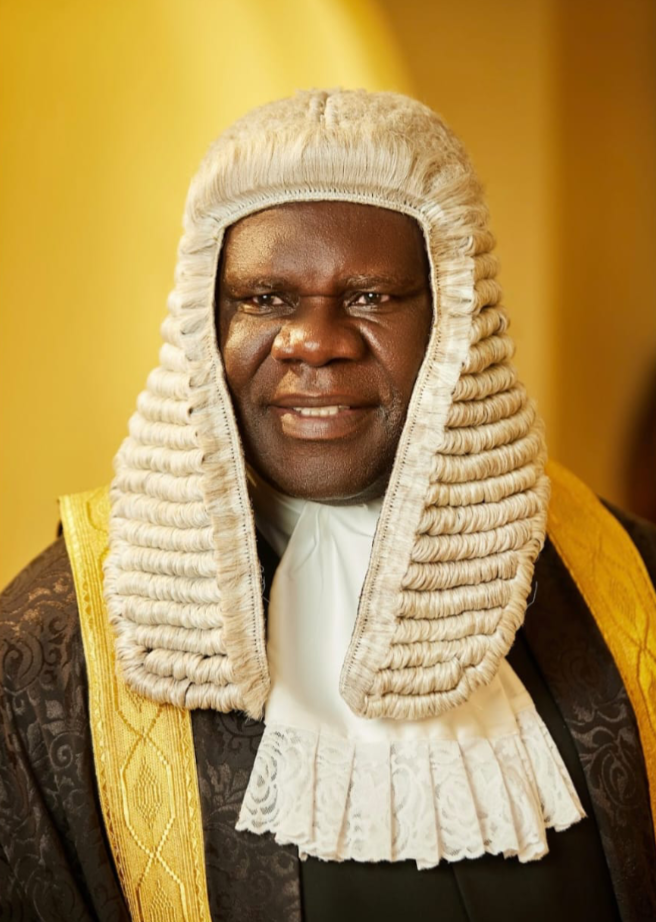
Prof N. O. Obiaraeri, SAN, NOTARY PUBLIC





0 Comments
No Comments Yet!
You can be first to comment this post!